How Low Voltage Cabling Supports Unified Communications Systems
Unified communications tends to get discussed at the software layer. People talk about collaboration platforms, call routing, presence indicators, softphones, conference rooms, and mobile apps. That is understandable, because those are the tools employees see and use. What gets less attention is the physical layer underneath it all. Yet in real offices, warehouses, schools, clinics, and mixed-use commercial spaces, unified communications succeeds or fails on the strength of the cabling plant.
I have seen excellent phone and collaboration platforms struggle because the building’s low voltage cabling was patched together over years of renovations. I have also seen modest systems perform remarkably well because the owner invested in thoughtful structured cabling, clean terminations, sensible labeling, and room for growth. When voice, video, messaging, access control, wireless, and data all ride on the same infrastructure, the cable pathway is no longer a background detail. It becomes a strategic asset.
Low voltage cabling supports unified communications systems by providing the stable, organized, and scalable foundation those systems need. That includes network cabling for IP phones, data cabling for workstations and collaboration devices, ethernet cabling for wireless access points, and backbone links between telecom rooms. A well-designed cabling system reduces dropped calls, improves video quality, simplifies moves and changes, and makes troubleshooting far less painful.
The physical layer behind every call and meeting
A unified communications system usually combines several functions that used to live in separate silos. Desk phones are now IP endpoints. Conference room cameras, microphones, and touch panels connect to the network. Messaging platforms sync with calling and presence. Wireless access points carry mobile traffic for roaming users. Printers, security devices, and IoT sensors often share the same low voltage cabling ecosystem.
From a distance, it can look like one software platform. Up close, it is a network of endpoints with different power, bandwidth, and latency needs. That is where low voltage cabling becomes indispensable.
An IP phone may use Power over Ethernet, or PoE, to receive both data and electrical power https://portinstall913.lumenforgex.com/posts/business-network-installation-tips-for-new-office-buildouts over a single cable. A conference room system may require multiple network drops because the display controller, codec, room scheduler, and camera all need connectivity. A wireless access point mounted in an open ceiling might draw higher PoE budgets than earlier generations. If the office also supports hot desking and video-heavy workflows, the pressure on horizontal cabling and switch uplinks rises quickly.
When the underlying structured cabling is designed with these realities in mind, unified communications feels seamless. Users walk into a room, tap a panel, join a meeting, and move on with their day. When that design is weak, the symptoms appear everywhere: jitter in calls, intermittent registration issues, random device reboots, poor roaming, and time-consuming service tickets that bounce between IT, telecom vendors, and facilities teams.
Why low voltage cabling matters more in unified environments
Traditional phone systems often relied on separate voice cabling, isolated handsets, and relatively fixed desk assignments. Unified communications changed that model. Voice became another application on the network, but one with very little tolerance for delay or inconsistency. Video added more bandwidth demand and made quality problems visible to everyone in the meeting. Mobility and flexible seating made patching and repatching more common. The margin for sloppiness shrank.
Low voltage cabling matters here for three practical reasons.
First, it creates signal consistency. Good terminations, proper bend radius, compliant cable categories, and tested links all help maintain transmission quality. That is especially important for real-time traffic such as VoIP and video conferencing, where packet loss and retransmission show up as human frustration.
Second, it supports power delivery. Modern unified communications endpoints often depend on PoE. If the cable type, length, bundle size, and switch power budget are not considered together, devices can behave unpredictably. In the field, that often shows up as a phone that boots but drops during peak use, or a camera that powers on yet fails when its processing load increases.
Third, it brings order to growth. Unified communications systems tend to expand incrementally. A company starts with IP phones, adds conference rooms, adds wireless collaboration devices, then adds occupancy sensors or digital signage. Without structured cabling, every addition becomes an improvisation. With proper pathways, labeling, and patch panel capacity, expansion becomes routine.
Structured cabling turns separate systems into one dependable platform
The phrase structured cabling gets used so often that it can sound abstract. In practice, it means building a standardized cabling architecture instead of running ad hoc cables wherever there is an immediate need. That architecture usually includes horizontal cabling to work areas, backbone connections between telecom rooms, patch panels, termination hardware, racks, cable management, and documented labeling.
For unified communications, structured cabling is what allows voice and data to coexist without chaos. It gives IT teams a known map of the environment. It also gives business owners flexibility. A desk can become a hoteling station. A private office can become a huddle room. A training room can get upgraded with video equipment. Those changes are manageable when the office network cabling was built with a plan.
This is especially true during tenant improvements and relocations. During a business network installation in a new space, owners are often focused on visible finishes, furniture, and move-in dates. Cabling gets pushed late in the schedule. That is usually a mistake. Once ceilings close and furniture goes in, every missed drop becomes more expensive. If unified communications is part of the plan, the low voltage cabling design should be coordinated early with furniture layout, room function, wireless coverage, switch capacity, and power.
I once walked a renovated office where the conference tables had built-in power and AV pass-throughs, but only one active network drop near each room display. The client wanted Teams Rooms, room schedulers, wireless presentation, and ceiling mics. None of that was impossible, but the “savings” from undercabling vanished the moment walls had to be reopened and pathways reworked. That project became a reminder of a common truth: the cheapest cable is the cable you pull before the room is finished.
Choosing the right cable category for communications traffic
Not every unified communications deployment needs the same cable specification, but category choice matters. CAT6 cabling remains a solid fit for many office environments. It supports Gigabit Ethernet comfortably and can handle multigigabit applications over shorter distances depending on the design. For many standard phone, desktop, and moderate wireless deployments, CAT6 offers a practical balance of cost and performance.
CAT6A cabling becomes more attractive when the environment is expected to support higher bandwidth, denser PoE loads, longer lifecycle expectations, or more demanding wireless and AV applications. It is bulkier, usually more expensive to install, and less forgiving in tight pathway conditions. But for new commercial builds where disruption later would be expensive, CAT6A cabling often pays for itself in reduced risk and longer useful life.
The decision should not be based on hype. It should be based on expected device density, switch speeds, wireless plans, room technology, building size, and future churn. A small professional office with predictable traffic may be well served by CAT6. A larger operation with heavy video use, high-performance wireless, and a desire to avoid recabling for years may be better off with CAT6A.
The same judgment applies to ethernet cabling routes. The best cable on paper will still disappoint if it is pulled too tightly, kinked above a ceiling tile, run next to interference sources without thought, or terminated carelessly. Category rating matters, but craftsmanship matters just as much.
Unified communications depends on more than bandwidth
People often assume communications quality is simply a matter of internet speed. Internet capacity matters, of course, but inside the building, local low voltage cabling has a major role in performance. Unified communications traffic is sensitive to delay variation, packet loss, and endpoint stability. Those issues are not always caused by the WAN.
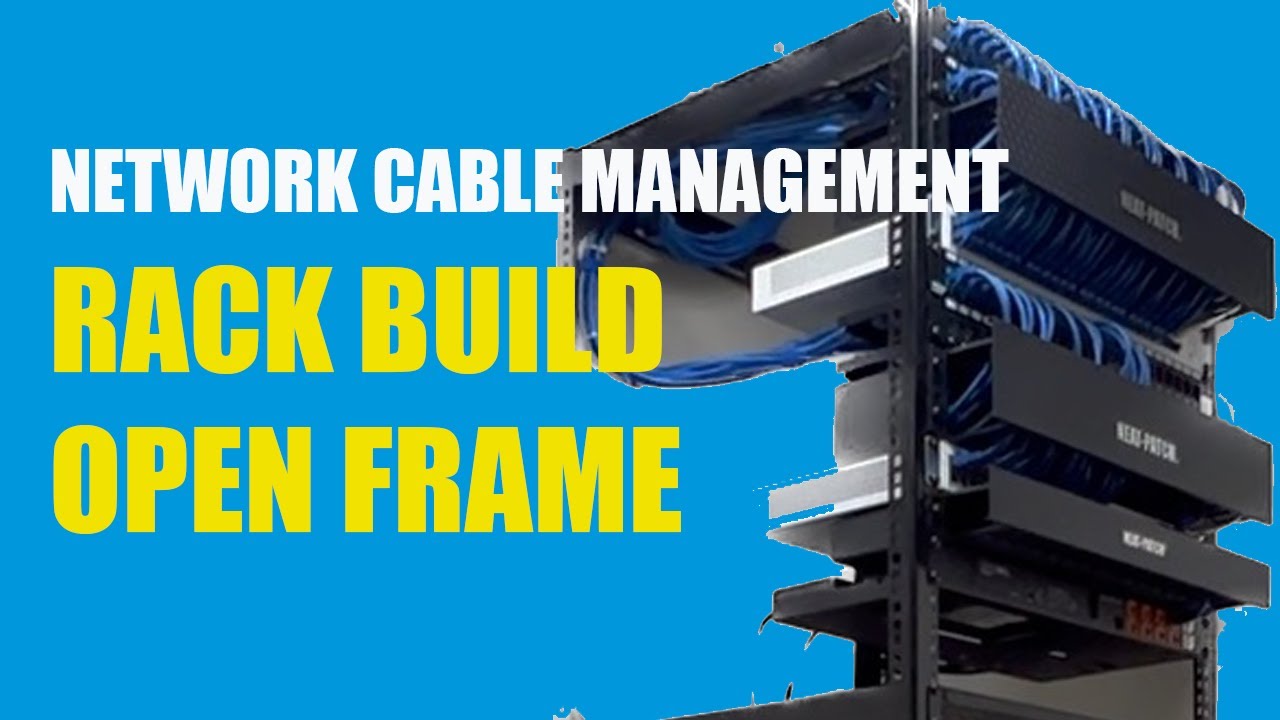
A poor network cabling installation can create intermittent faults that are maddening to diagnose. Maybe one cable pair is marginal. Maybe a patch cord is damaged. Maybe the installer exceeded untwist limits at termination. Maybe a run passes certification at the edge of tolerance but becomes problematic when PoE load and temperature rise. Those are physical issues, but users experience them as software problems. The help desk ticket says “audio keeps breaking up,” not “horizontal link 2A-17 has a termination defect.”
Good data cabling work reduces that ambiguity. It does not guarantee flawless calls, because switch configuration, QoS, ISP quality, and platform design also matter. But it removes one of the most common sources of avoidable instability.
Power over Ethernet changes the design conversation
PoE has made low voltage cabling even more central to unified communications. Many phones, cameras, room controllers, and wireless access points are powered through the same cable that carries their network connection. That simplifies deployment and reduces dependence on local electrical outlets. It also raises the stakes for cable design.
Heat buildup in bundles, especially with higher-power PoE standards, can affect performance. Cable gauge, installation methods, and pathway fill become more important. In dense ceilings, especially above conference suites or open offices with many access points, these factors deserve real attention. A clean-looking install is not enough. The installer should think about power loads, cable grouping, and ventilation conditions.
This is one place where experienced low voltage cabling contractors stand apart from teams that mainly “pull wire.” They understand that a wireless access point mounted today may be swapped later for a model with greater throughput and higher power draw. They know a video bar and room scheduler may share a switch stack with phones and cameras. They plan for patch panel organization and switch uplink growth before those become emergencies.
The role of network cabling in room-by-room communications design
Unified communications does not live only at desks. Conference rooms, break areas, reception desks, training spaces, and private offices all have different use cases. Effective office network cabling reflects those differences.
A receptionist may need a phone, workstation, printer, and visitor management device. A huddle room may need a display, camera, touch controller, and wireless presentation appliance. A larger boardroom may require multiple floor boxes, under-table pathways, separate AV and network considerations, and redundancy for critical meetings.
This is where generic minimum-drop standards can fall short. A rule like “two data drops per office” might be fine for one tenant and inadequate for another. In unified communications design, cabling should follow workflows rather than old habits.
A simple planning exercise often helps. Walk through how each room will actually be used on a busy Wednesday at 10 a.m. Who is in it? What devices are active? Is video expected? Are people docking laptops, using Wi-Fi, or both? Does the room need room scheduling outside the door? Does furniture placement constrain where ports should live? These questions lead to far better results than copying a standard from the last project.
What a good cabling installation looks like in practice
You can usually tell whether a network cabling installation was built for long-term use within a few minutes of opening a telecom room. The signs are not glamorous. They are methodical.
- Clear labels on both ends of every run
- Patch panels with logical port organization
- Cable management that preserves bend radius and access
- Test results retained and tied to each link
- Spare capacity in racks, pathways, and switch planning
None of those items impresses a casual observer, but they matter enormously once the business starts making changes. In unified communications environments, moves and adds happen constantly. Departments shift. Rooms get reconfigured. New collaboration hardware appears mid-lease. Organized low voltage cabling turns those changes into small tasks instead of disruptive projects.
I have also seen the opposite. Cables draped across ladder rack without support. Patch cords used as permanent fixes. Labels missing or duplicated. Small unmanaged switches hidden under desks because there were not enough drops in the original build. Every one of those shortcuts creates drag. At first it is tolerable. Over time it becomes the reason every expansion takes twice as long and every outage takes too many people to solve.

Retrofitting older spaces without creating new problems
Not every business gets to start fresh in a new buildout. Many unified communications upgrades happen in existing buildings with legacy cabling of mixed quality. Some spaces have old voice cable, partial CAT5e, scattered CAT6 cabling, and years of undocumented changes. The challenge in these projects is deciding what can stay and what should be replaced.
That decision should be guided by testing, not guesswork. If existing data cabling passes certification for the intended application and the pathways are serviceable, portions may remain useful. But if the infrastructure lacks documentation, fails testing, or cannot support current PoE and performance needs, partial reuse can become a false economy.
Retrofit work also requires sensitivity to occupied spaces. Office operations may continue during the project. Ceiling access may be limited. Dust, noise, and after-hours work can affect schedules. A careful contractor will phase the work, pre-stage materials, and coordinate cutovers to minimize disruption. The best retrofit jobs are not the fastest-looking ones. They are the ones that leave the business with a cleaner, more understandable environment than it had before.
Common mistakes that hurt unified communications performance
Most cabling failures in unified communications are not dramatic. They are cumulative. A few examples come up repeatedly in the field.
- Underestimating device counts in conference rooms
- Selecting cable category without considering future PoE and bandwidth needs
- Ignoring labeling and documentation during installation
- Overfilling pathways and racks with no room for growth
- Treating wireless as a replacement for hardwired room technology
That last point deserves emphasis. Wireless is essential, but many unified communications devices still perform best when hardwired. Conference room endpoints, desktop docks in high-use environments, security appliances, and uplink-critical devices benefit from stable ethernet cabling. Wi-Fi is a layer of flexibility, not a reason to neglect structured cabling.
Documentation is part of the infrastructure
Businesses often think of cabling as the physical installation only, but documentation is part of the finished product. For unified communications systems, records save time at every stage: deployment, troubleshooting, expansion, and vendor coordination.
Good documentation usually includes as-built drawings, labeling conventions, test reports, rack elevations, patch panel maps, and notes about spare capacity. It should also reflect real changes, not just the original design intent. In many offices, the lack of current documentation is what turns a one-hour change into a one-day investigation.
If a service provider says a room system is offline, the IT team should be able to identify the switch port, patch panel position, cable ID, and room destination without tracing lines by hand. That level of clarity is not excessive. It is what mature low voltage cabling looks like.
How low voltage cabling supports growth after the initial rollout
Unified communications rarely stays static. Businesses add users, open overflow areas, reconfigure teams, and adopt new room technology. Sometimes they merge with another company and have to integrate two very different environments. Cabling that was “good enough for now” can become the limiting factor surprisingly fast.
Scalability is where thoughtful business network installation delivers the strongest return. Spare conduits, extra rack units, additional drops in likely growth zones, and a sensible backbone strategy do not just support future expansion. They lower the cost of future expansion. That distinction matters.
A company that expects to stay in a location for seven to ten years should think beyond opening day requirements. Pulling a few extra data cabling runs during construction is inexpensive compared with adding them after occupancy. The same goes for choosing between CAT6 cabling and CAT6A cabling in spaces likely to host denser wireless or advanced AV systems later.
What business owners and IT teams should ask before installation
The best unified communications cabling projects begin with sharp questions, not product catalogs. Before any network cabling installation starts, stakeholders should align on a few essentials. How many users and endpoints are expected at launch, and what is realistic growth over the next several years? Which rooms will carry the heaviest video and collaboration load? What PoE devices are planned? How much flexibility is needed for moves, adds, and furniture changes? Who will maintain the documentation once the project is complete?
Those questions shape everything from cable category to telecom room layout. They also expose hidden assumptions. I have seen owners plan a beautiful office around hybrid work, only to realize late in the process that hoteling areas needed more ports, more wireless density, and different patching logic than traditional assigned seating. Catching those details before the build is what separates a clean deployment from a reactive one.

The infrastructure people forget, until it fails
Low voltage cabling is easy to overlook because, when done properly, it disappears into the building. Users do not praise patch panels or cable trays. They notice when a call sounds clear, when a room joins a meeting on the first try, and when a relocation takes hours instead of days. That reliability is built on physical infrastructure.
Unified communications systems promise simplicity at the user level. Delivering that simplicity requires discipline underneath. Structured cabling, sound network cabling design, careful ethernet cabling practices, and a well-executed office network cabling plan give voice, video, messaging, and mobility a dependable foundation. For businesses investing in communications tools, that foundation is not an accessory. It is the part that makes every other investment work as intended.
Fontana Tech Pros provides professional network cabling installation, structured cabling, fiber optic installation, commercial WiFi, access control, security camera installation, alarm systems, and phone system solutions for businesses throughout Southern California. Learn more at https://fontanatechpros.com/.
Fontana Tech Pros specializes in reliable network cabling solutions for commercial offices, warehouses, schools, and industrial facilities. Our experienced team delivers high-quality structured cabling and low-voltage installations designed for long-term performance.